Easygoing
Harbour sailing yacht
Relaxed and hands-on
- Time1.5 hours
- AgesAll ages
- ServedHot drink and a cookie
Guides
Language
Currency
Check open spotsfrom $65 · no fee to cancelInteractive to-do list
Auckland harbour 1.5-hour sailing cruise
★ 4.7 · Rated by 316 guests
Checklist · 11 tasks
Mark items as done. Your progress is saved on this device only.
0 / 11 ready
All ticked. Only the booking is left: pick a date and your place on deck.
Secure your spotA sailing trip in Auckland puts you on a real yacht with ropes, a wheel and a crew who will hand you both. This is how the outing runs, how the boat moves, and what to pack.
Editorial team, aucklandharbourcruise.click · Updated November 8, 2026 · Quick read: 7 min
The essentials
The outing begins on foot, at a small booking kiosk inside Viaduct Harbour where Quay Street runs out, across the corner from the New Zealand Maritime Museum. Explore Group, the company that sails these yachts, wants every guest at the kiosk a quarter of an hour ahead, 15 minutes before casting off.8,9 Arrive a little earlier on a busy summer day: the Viaduct fills with diners, superyacht watchers and other boat crews, and it is easy to walk past the kiosk the first time.
The yacht itself is the reason to go. Explore keeps three identical 50ft monohulls for its harbour sailing, named Courageous, Defiance and Challenger, built for relaxed cruising rather than racing.10,11 Each has a large open cockpit where you will spend the trip, a dining saloon below deck, a small galley, a licensed bar and toilets.12 The cockpit is where the ropes and the wheel are, so it is where the action is.
Before the lines come off, the skipper and crew introduce themselves and run through a short safety briefing.13 Listen to the parts about where to sit while the boat turns and which ropes to leave alone. The rest of the briefing is practical common sense: keep one hand for the boat when you stand, watch your head near the boom, and tell the crew early if you feel unwell. Then it is time to cast off.
Three boats, three ways to sail
| Boat | Time on the water | Who can go | What you can do |
|---|---|---|---|
| Harbour yacht | 1.5 hours | All ages | Steer, hoist sails, relax |
| America's Cup yacht | 2 hours | Aged 10 and over | Steer, work the grinders |
| Museum scow Ted Ashby | About one hour | All ages, life jackets for kids | Help hoist the sails |
Durations and ages from Explore Group and the New Zealand Maritime Museum; check each operator's page before you book.20,22,16,18,19,23
Nobody expects you to know how to sail. The operator says plainly that no experience is needed and that the crew guides you through each task.1 You can take the helm, help haul a sail up its mast, or stay in your seat with a camera, and every one of those is a normal choice on the same trip.2 If you do want a go at the wheel, say so early, while the skipper is handing out jobs, and do not worry about getting it wrong: the crew stays beside you the whole time.
Steering a yacht feels different from steering a car. The boat answers slowly, so small movements matter more than big ones, and the skipper will usually give you a landmark to aim at, a headland or a building on the far shore. When the yacht changes direction across the wind, called tacking, the sails swing to the other side and the crew will ask everyone to shift across. Keep your head low as the boom passes and move when you are told, not before.
If that taste of helming leaves you wanting more, the same operator also sails real America's Cup race yachts for 2 hours, where guests can steer or work the grinders that trim the huge sails.16,17 It is a more physical outing, and anyone younger than 10 has to sit it out.18 Those race boats were designed mainly for light winds and sail within set wind limits, with the skipper making the final call each day.
Can you feel the boat rocking on a cruise like this? Yes, and that is the point of sailing rather than motoring. Explore warns that its yacht has moving parts and ropes and that it will pitch and roll during the trip.3 A sailing boat also leans away from the wind when the sails fill, which sailors call heeling. On a calm afternoon it is a gentle tilt; with more breeze the deck slopes and spray can reach the cockpit.
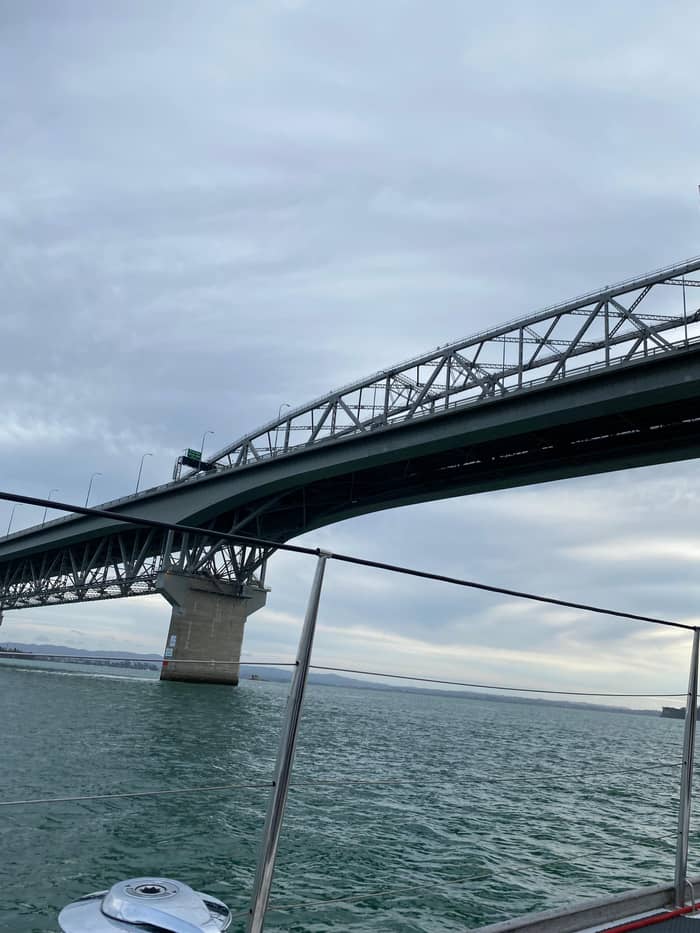
The inner Waitematā is usually kinder than open sea. Explore describes its evening sail as watching the city light up from sheltered water, and the harbour sail is billed as an inner-harbour outing around the bridge and the city waterfront.28,29,14 Short, choppy waves can still build when wind blows against the tide, so treat any day on the water as a day when the floor moves, and hold a rail or a seat edge whenever you change places.
If you are prone to seasickness, prepare before you board. New Zealand's Healthify guidance is that prevention works better than treatment, and it suggests a small, light meal beforehand and no alcohol the night before.27,30,31 On board, sit where the motion is least, look ahead at a fixed point on the horizon and breathe fresh air.24,25,32 Children between 5 and 12 are more prone to it than adults, and seasickness medicine needs to go down before the trip, not once you feel ill.33,34
Which sail fits you
Start with what worries or excites you, and the right boat follows.
If I have never been on a sailing boat
The harbour yacht
No experience needed, and the crew guides every job.1
If I want speed and something physical
The America's Cup yacht
Guests steer or grind the winches on a real race boat.17
If I get seasick easily
A calm-day sail, mid-boat
If I use a wheelchair
The museum scow
Ted Ashby takes wheelchairs, depending on their size.7
If We are bringing a toddler
The harbour yacht
All ages sail, and under-fives travel free.26
Pick your boat
Easygoing
Relaxed and hands-on
Physical
A real race boat
Evening
Three courses at dusk
What to wear on a harbour cruise is simpler than it sounds. Explore asks for flat-soled shoes, clothes that suit the day's weather and an extra layer for your time on the water.4,5 Flat soles grip a deck that slopes, gets wet and is dotted with fittings that catch heels. Clean trainers or boat shoes are ideal. Leave long scarves and loose straps at home, since anything that dangles can tangle in a winch or a rope.
Auckland's seasons change the packing list more than the experience. Tātaki Auckland Unlimited calls January the sunshine month, and summer sailing means hats, sunscreen and sunglasses with a strap.36 Winters are mild enough to enjoy the city, with crisp mornings giving way to blue-sky afternoons, and clear days are common.37,38,39 Even then, a few minutes on the open water make the same air feel noticeably sharper than it did on Quay Street.
Rain is the other variable. Explore's terms say every departure depends on minimum numbers and on sea and weather conditions, and a stormy day can cancel a sail.40 Light showers rarely do. A thin waterproof jacket folds into a pocket and doubles as a windbreaker on the way back. Carry little: a small bag, your phone tethered or zipped away where spray cannot reach it, and a bottle of water if you want one between hot drinks.
Price your sail
Choose how many are sailing and compare the three sails side by side.
Compare 3 side by side
Choose how many are sailing and compare the three sails side by side.
≈
View≈
View≈
ViewConverted at the ECB reference rate, from-prices as listed by GetYourGuide. The precise amount is shown when you book.
The outing in order
Before departure
Report to the Explore kiosk on the Viaduct 15 minutes early.8,9
At the berth
Skipper and crew welcome you aboard and give a short safety briefing.13
Leaving the marina
Help hoist a sail or watch the crew do it from the cockpit.2
Mid-harbour
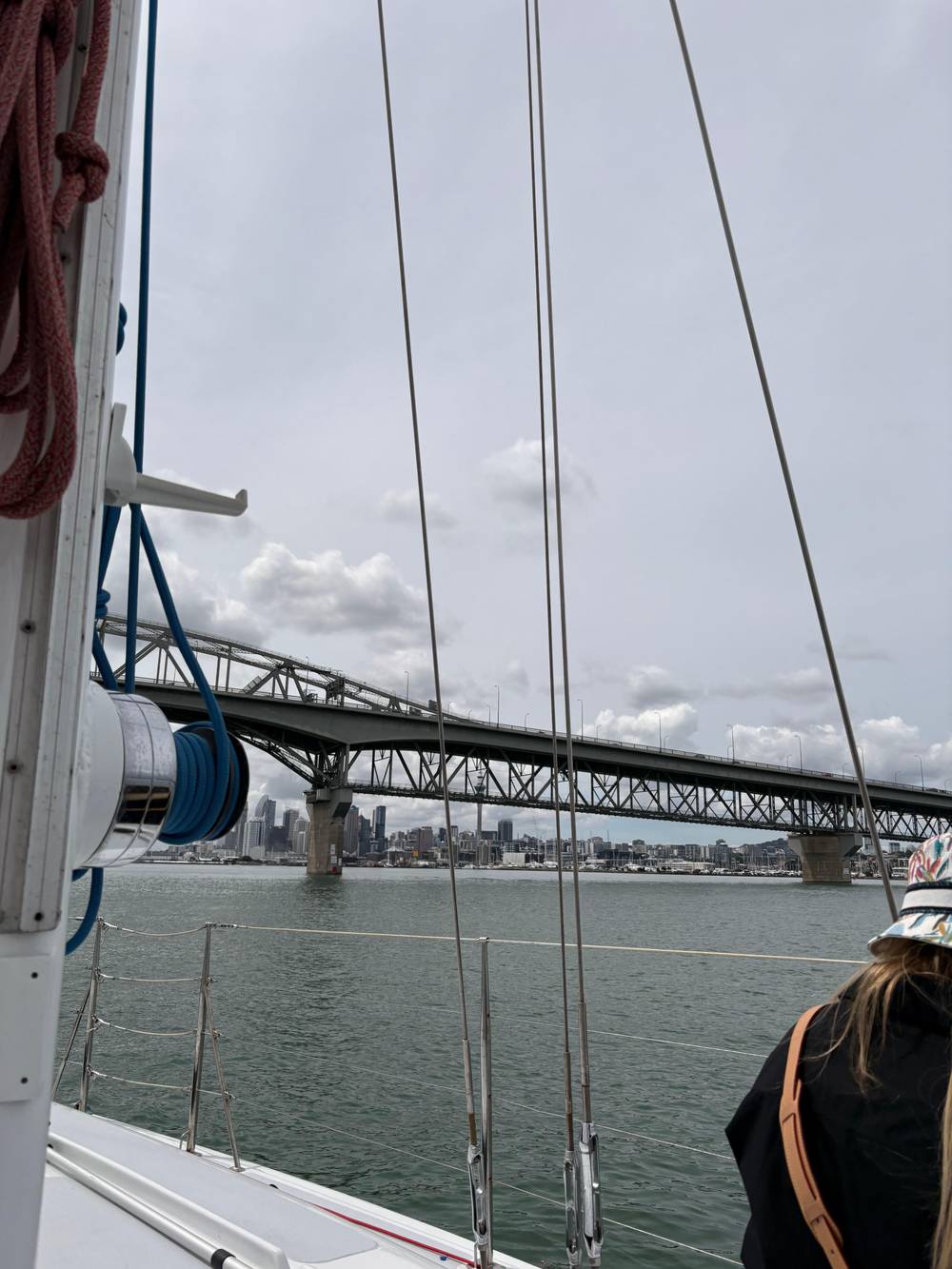
The yacht sails beneath the Harbour Bridge with the skyline behind.14
Any time
Ask for the helm and steer for a landmark the skipper points out.2
Heading home
Coffee, tea or hot chocolate on the way back to the Viaduct.15
Families are welcome: the harbour sailing takes every age group, with no fare for under-fives.26 On its own price list, adults are 16 and over and children 5 to 15.41 Small children are safest in the cockpit with an adult, away from the winches, and many enjoy a supervised turn on the wheel. Bring a warm top for them even in summer: children cool down faster than adults once the wind picks up.
This sail is not wheelchair accessible, and boarding and leaving the yacht both involve stairs that guests must manage unaided.6 Anyone with limited mobility is asked to talk to the crew before booking, since the moving deck and lines make the boat hard to move around.42 A toilet on board takes some of the worry out of the trip for older travellers and families with small children.
There is a gentler alternative close by. The New Zealand Maritime Museum's heritage scow Ted Ashby accepts wheelchairs, depending on their size, with at most two on each sailing.7 Children under 14 wear life jackets on every museum sailing, supplied by the museum.23 Public ferries are another option for anyone who mainly wants to be on the water: most of Auckland's ferries have ramps for wheelchairs and mobility scooters.43
Video
Poseidon Adventures on YouTube · The video stays unloaded until you press play.
Preventing motion sickness before it happens works better than treating the symptoms after they've started
Explore lists a 3:15 PM departure every day, plus a 10:30 AM sailing on selected summer days; confirm which one runs on your day before you plan anything around it.35,44 The afternoon light over the city is soft and warm, while a morning sail often has lighter wind and calmer water. If you want a stronger breeze and a livelier ride, the afternoon is usually the better bet, though no day on the harbour is guaranteed.
The trip comes with a hot drink. You choose coffee, tea or hot chocolate, served with a cookie while you sail.15 There is no meal on this outing, so eat beforehand or plan lunch at the Viaduct afterwards, where restaurants, bars and cafes ring the marina.45 The Auckland harbour sailboat cruise is short enough to fit around a meal rather than replace one. A late breakfast before the morning sail, or an early dinner by the water after the afternoon one, makes a full and easy half day.
On GetYourGuide the 1.5-hour cruise is priced from $65. Cancelling costs nothing if you do it a full 24 hours ahead, and you settle the bill nearer the time. It needs minimum numbers to run; if they are not met, the operator moves you to another day or refunds you in full. Keep your phone on in the hours before departure, since that is when any change of plan reaches you. The listing's 316 reviews average 4.6, with the guide scored 4.8.
FAQ
The crew explains every job and guides you through it, and how involved you get is entirely your choice.1
Guests can take the helm or help hoist the sails, and anyone who prefers can simply sit back and watch.2
Every age can sail, and under-fives go free on the operator's own fares.26
Sea and weather decide each departure; on your side, cancelling is free until 24 hours before.40
Sources
Continue reading
Thinking about a sail on the Waitemata? A real person answers here.